Food history
Pepperoni Isn't Italian: The Story Behind America's Favorite Topping
Order pepperoni pizza in Naples and you'll probably get bell peppers. Here's how a New York butcher-shop sausage became the topping America orders most.
By The New York Pizza Company5 min read
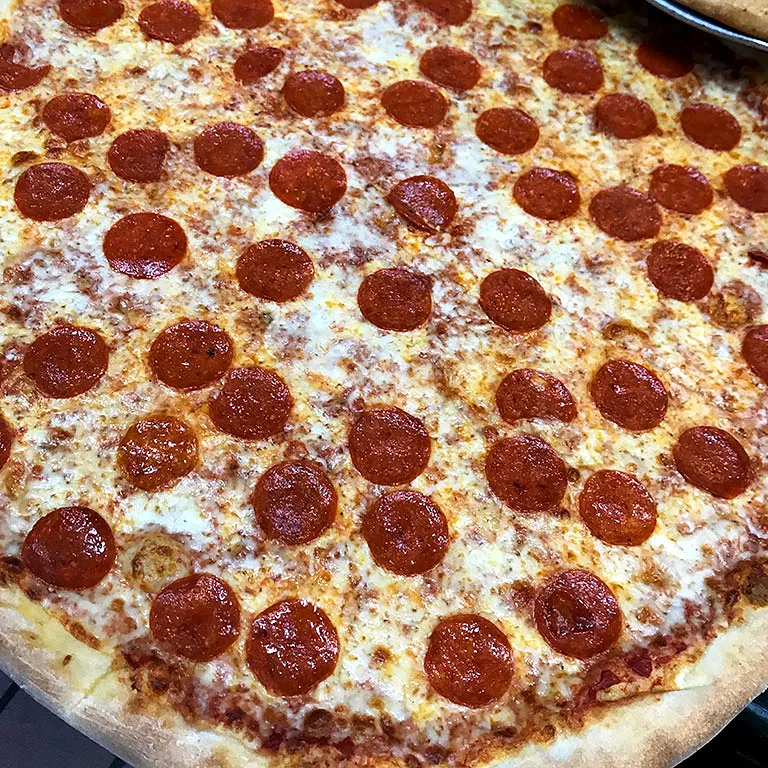
Walk into a pizzeria in Naples, ask for a pepperoni pizza, and you'll probably get a pie covered in bell peppers. The cook got your order right. In Italian, peperoni is the plural of peperone, the word for a bell pepper. The spicy red sausage we put on pizza here doesn't exist over there under that name.
Pepperoni is an American food. It was made by Italian immigrants, sold out of American butcher shops, and turned into the country's favorite pizza topping by American pizzerias. It's also the topping America orders most, so we went looking for the story behind it. Here's what we found, and what it means the next time you order a slice in Kissimmee.
What is pepperoni, exactly?
Pepperoni is a kind of salami. It's a dry sausage made from cured pork, or pork and beef, seasoned with paprika and chili pepper, according to Wikipedia's entry on pepperoni. The curing helps give it that bright red color before it ever sees an oven. Next to the spicy salamis of southern Italy, it's usually softer and finer-grained, and a little smoky.
The meat is ground, mixed with the spices, stuffed into a casing, and air-dried. The casing used to be animal intestine. Today it's often collagen, which you can eat, or cellulose, which gets peeled off before slicing. Keep the casing in mind, because on a pizza it has a lot to do with whether a slice curls up in the oven.
Where did pepperoni come from?
Nobody can point to the first person who made it. The date you'll see most often is 1919, when pepperoni shows up in print in New York City. Tasting Table calls its exact origins something of a mystery. Wikipedia notes an even earlier use of the word for a sausage, in a 1916 Anchorage newspaper.
The setting is easier to pin down. In the early 1900s, Italian butcher shops were doing good business in New York, but the ingredients from home were hard to get. So butchers took the sausage-making they knew from southern Italy and worked with what American shops sold. Paprika probably ended up in the seasoning because it was cheaper and easier to find than Italian chiles. What came out was milder and smokier than the salamis it grew from. The name and the craft came from Italy, but the sausage itself was born here.
When did pepperoni land on pizza?
It took a few decades. At first, pepperoni went mostly into Italian deli sandwiches. That's still where you'll find it in plenty of places, ours included. Our Italian Sub stacks ham, salami, pepperoni, and provolone with lettuce, tomatoes, onions, and banana peppers.
Pizza and pepperoni grew up together in the 1950s, when pizza spread from Italian neighborhoods to the rest of the country. PMQ Pizza Magazine reports that the earliest known evidence of pepperoni on an American pizza is a 1950 menu from The Spot in New Haven, Connecticut. A pizzeria in Columbus, Ohio, claims it introduced pepperoni as a topping too. PMQ's honest answer is that several shops probably got there on their own.
The big push came in the 1960s and 70s, when pizza chains grew across the country. Pepperoni was cheap and salty and it kept well, so it was easy to ship and easy to stock. By the time most of us were ordering our first slices, pepperoni was simply what pizza looked like.
Why does some pepperoni curl into little cups?
You've probably seen it. The slices curl up at the edges in the oven, crisp and dark around the rim, and each one holds a little pool of orange oil. Pizza people call it "cup and char," and some fans call the slices "roni cups."
All pepperoni used to curl like that, at least a little. The natural casings it was stuffed into don't stretch. The way the meat is packed inside makes each slice pull into a cup as it heats. When the big suppliers changed how pepperoni was made and cased, the slices started baking up flat. Flat slices cover a pie evenly and don't leave pockets of hot grease, so flat became the standard for most pizzerias.
Cup and char never went away in parts of the Midwest and the Great Lakes, especially Buffalo and Cleveland. It came back into fashion in the 2010s. The Takeout explains that thickness plays a part too. Medium-thick slices cup best, which is why "Old World" pepperoni is often cut thicker than the thin, bagged kind.
Is pepperoni still America's favorite topping?
Yes, by a lot. A YouGov poll found that 82 percent of Americans like or love pepperoni on pizza. Almost a quarter call it their number one topping, nearly twice as many as picked sausage.
Some things have changed, though. PMQ's 2026 Pizza Power Report is built on menu data from Datassential. It says plant-based pepperoni is one of the hot toppings and is expected to get hotter. The same report says the classic kind is as popular as ever.
How do we put pepperoni to work?
At our shop on Bill Beck Blvd, pepperoni shows up all over the menu, on a lot more than a plain pie. A few ways to try it:
Add it to any pizza as an extra topping, for $1.00 on a 12-inch and $2.00 on a 16-inch or 18-inch.
The Brooklyn Sting pairs pepperoni and bacon with ricotta, mozzarella, crushed red pepper, cayenne, and Mike's Hot Honey.
The Bronx Bomber piles pepperoni on with sausage, ham, salami, bacon, and meatballs. The Loaded New Yorker puts it with sausage, ham, mushrooms, onions, green peppers, and black olives.
Pepperoni Pinwheels come six to an order with marinara, and the Pepperoni Roll sits on the menu with our calzones and stromboli.
If you want a pepperoni pie at home for a movie night, our page Pizza Delivery and Pickup in Kissimmee has the ways to order. And if you live in Hunters Creek, New York-Style Pizza Near Hunters Creek has The Brooklyn Sting and the rest of our specialty pies.
A New York story, one slice at a time
Somebody may tell you pepperoni pizza is a little too ordinary. You can tell them it's one of the most American things on the menu. It took Italian sausage-making, New York butcher shops, a New Haven menu, and the pizza boom that followed to put it there.
Come in, grab a slice, and see for yourself why it's held the top spot for so long.